Learn Center
How to Measure Knowledge Management Metrics
Measuring knowledge management success gives you a qualitative, measurable read on how well your strategy is working. This article walks through the 6 knowledge management metrics your team should monitor.

An efficient knowledge management process helps teams collaborate, share and create knowledge that supports business goals. A knowledge management strategy is only as good as the tools and people behind it: even strong software fails if teams don’t know how to use it, so leaders need a way to check whether it’s actually working.
Here are 6 Knowledge Management metrics you should be monitoring today.
6 Knowledge Management Metrics to Track
When measuring knowledge management success, start with your knowledge management strategy’s own objectives, then choose the knowledge management KPIs that reflect them, not just the ones that are easiest to pull from a dashboard.
Contribution
One of the goals of knowledge management is to get teams to engage and collaborate through a central database. As the saying goes, “knowledge is power”, and organizations that see teams actively contributing to the database can grow their knowledge and improve processes. Contribution is a key metric to take a look at how successfully your strategy is to boost the knowledge flow and addition.
Consider the number of employees that are updating and contributing to the platform and the frequency of contributions. Whether this is through updating old information or adding new knowledge, this active contribution is an indication of how well the workforce knowledge is growing. This can also help you see who your power users are, finding out their motivations and duplicating these motivations with your other employees.
Raw contribution counts can mislead on their own: a knowledge base updated 200 times by three power users looks identical on a chart to one updated by thirty people across the team, but the two are in very different health. Before crediting a culture change, check the number of unique contributors, not just the total edit count.
Read more tips on how to encourage knowledge sharing in the company.
Freshness of content
Knowledge reviews are essential to ensure that content in the knowledge base is up-to-date and accurate. This metric takes a look at how old content is and when it was last updated. Ask questions like: Is the content on the knowledge base reviewed in a regular manner to ensure freshness? Is there lots of content that hasn’t been updated for a long time?
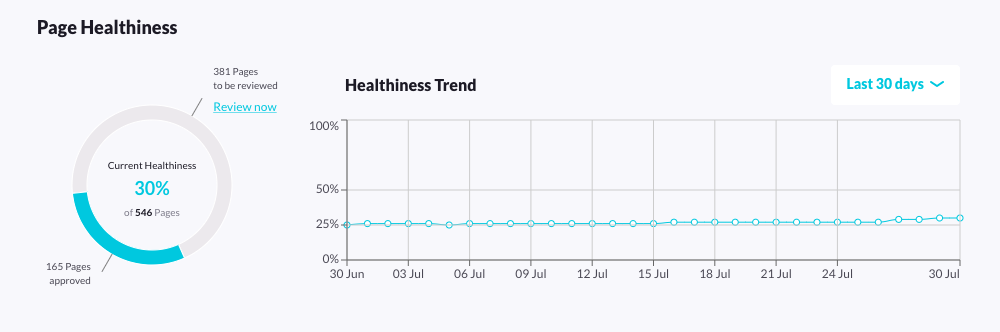
By implementing new changes, it will not only drive efficiency through accurate information, but allow users to apply new learning principles to technical content to promote knowledge retention, such as through the use of visual media.
Read more tips on how to build a collaborative process to keep your knowledge base up-to-date.
Adoption
While contributions take a look at users who actively update content, it is also important to see how passive users are interacting with the internal knowledge base. A knowledge management strategy should incorporate all members of an organization, so that every member is aligned with company structure and objectives. Take a look at how often teammates utilize the knowledge base. Adoption metrics such as frequency of logins and viewership will serve as a measure of the knowledge management adoption rate.
Search frequency
How often do teammates perform searches? Are they relying on the knowledge base to run processes? The knowledge management platform, while available to all users, may not be their go-to source of information. However, this can impede business growth when employees are not fully aligned with company knowledge. A low search frequency can be an indicator that employees are frustrated with inefficient software or unhelpful information.
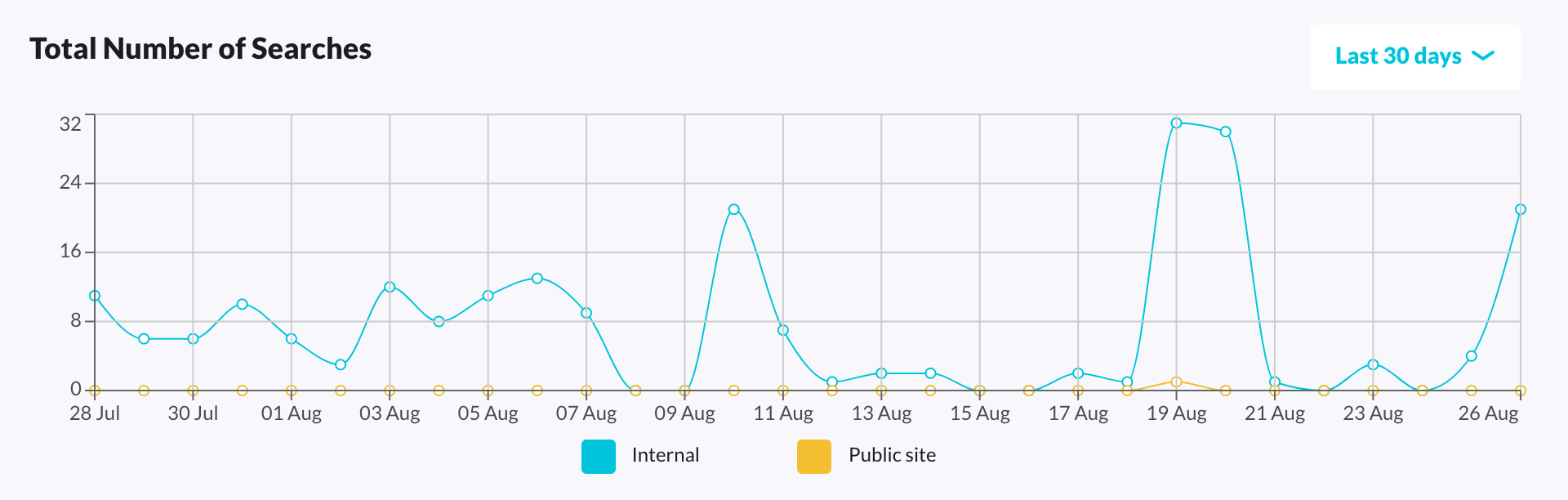
Read more about how to build a search-first culture in your team.
Search healthiness
Search data, such as common phrases or questions, will tell you what teams are most commonly searching for and how they are doing it. Search healthiness measures the number of successful searches when teams use the knowledge base. This can be measured by looking at the number of searches that get successful results and the number of searches done again to get a more desired result. Repeated searches can go to show that knowledge organization is not properly structured in the database, leading to confusion.
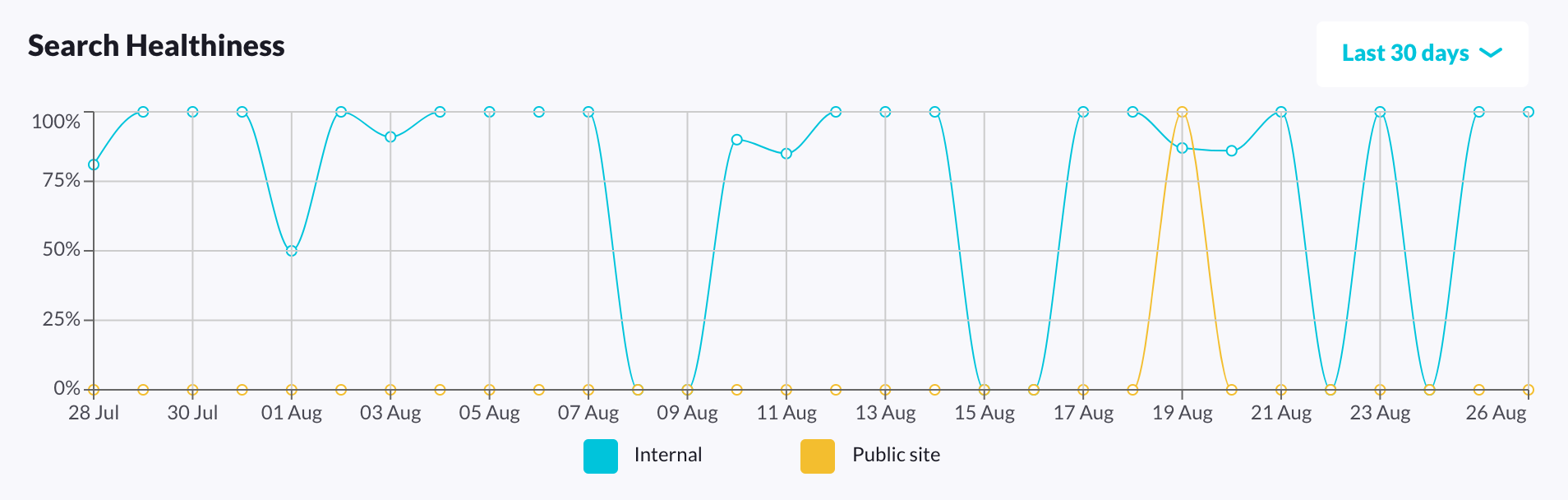
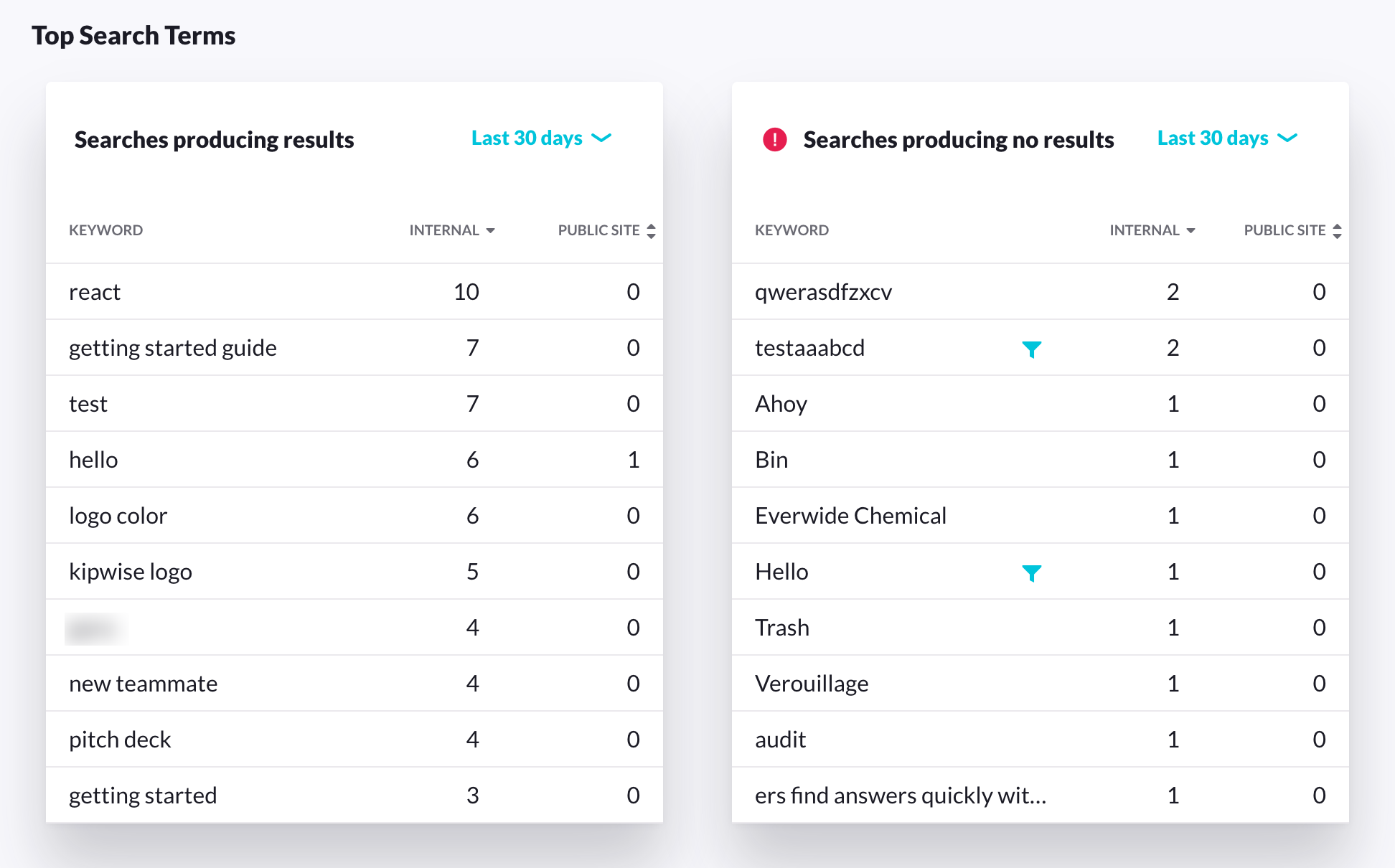
For example, on Kipwise, other than showing you the search healthiness (i.e. % of searches that have relevant results), you can also see the top search terms that produce results vs. no results.
Sample use cases:
- Your teammates often search for troubleshooting info around a certain feature. Perhaps a training around that would be helpful?
- Your teammates often search for xxx but coudn’t find relevant results. Perhaps you should add a new article or update the existing articles to insert keywords that can help teammates discover the right article?
Response time
One of the benefits of a knowledge management system is that it enables collaboration between team and departments. This means that individuals seeking for answers or solutions can direct this task at another member and effectively get a solution. When an organization has a healthy engagement with the knowledge management system, response times will be lower and enable quicker completion of complex tasks.
How to enhance engagement for knowledge sharing
Successful knowledge management relies on 3 components: people, processes and technology. For starters, employees need to actively engage with and use the knowledge that’s available. This will lead to maximized efficiency and productivity for the best output.
Besides well-informed teams and the right culture, the platform itself matters. Kipwise is a modern knowledge management tool built to help teams capture information, organize it and share knowledge, with built-in reports like Page Healthiness and search analytics so you can track the metrics above without extra tooling.
Looking for the best knowledge base software?
Join 10,000+ users using Kipwise to better share team knowledge